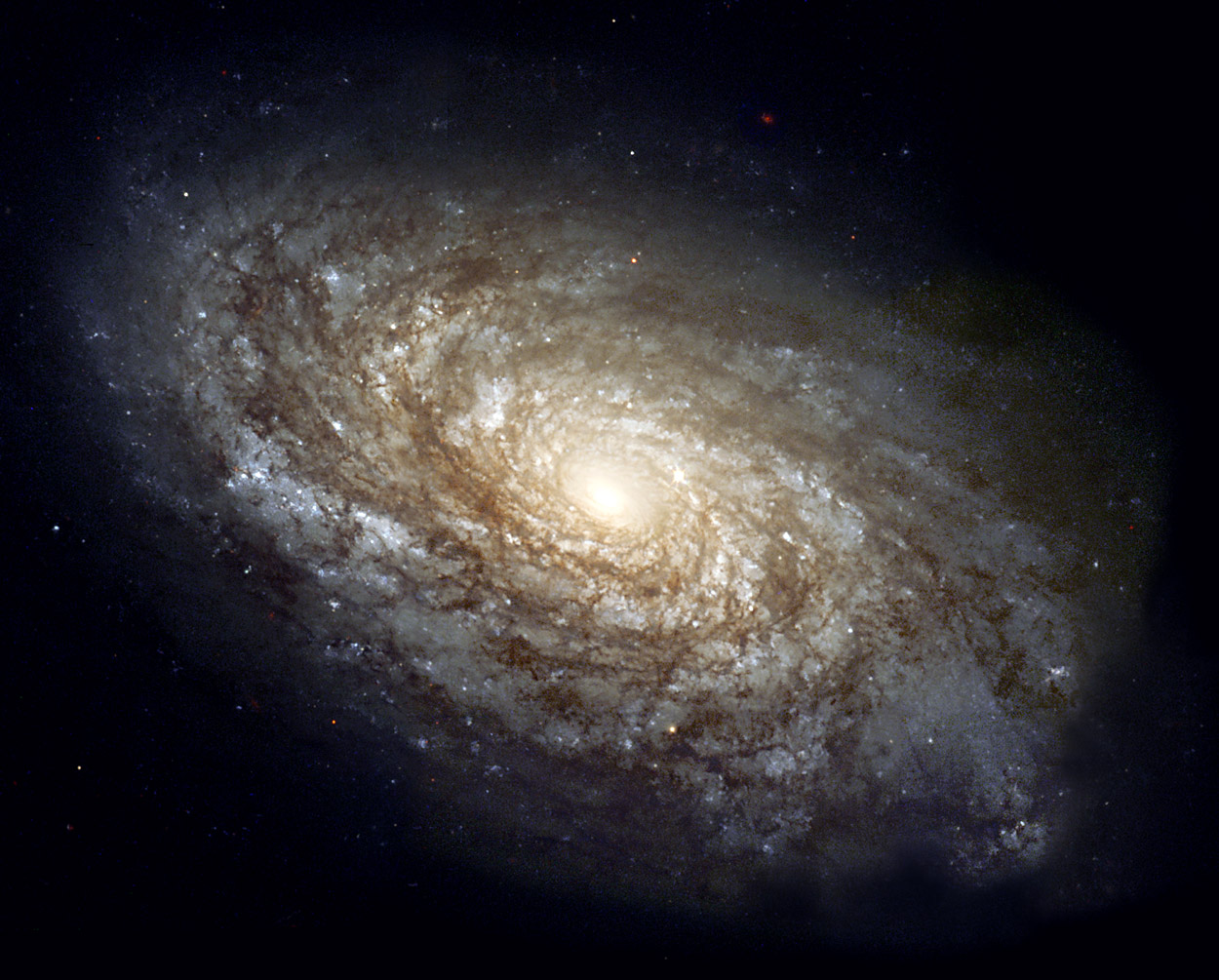
Most law students take Property Law at some time during their first year. At first the law of property may seem inherently Terrestrial, as it has arisen out of disputes between human beings over earthy possessions. But the fundamental legal doctrines that underlie modern property law can be extended to Extra Terrestrial circumstances with a little imagination and a firm understanding of the public policy concerns which have shaped this particular area of jurisprudence. The Property posts will explore how the ideas disseminated in first year Property Law classes can be extended to accommodate mankind's expansion beyond our Terrestrial world.
Being a law student myself, I would like to take a moment to explain that the ideas explored in this article should be viewed as isolated from all other areas of law. Any lawyer will tell you that a legal issue will most often have implications in several areas of law. For that reason, it is important to remember that these are extensions of Property Law, and have not been tempered with any other bodies of legal knowledge, such as the Law of Contracts, Civil Procedure, or Torts. While these other areas of study are important, it would not be practical to complicate our conversation beyond the scope of Property Law. Contracts and other bodies of legal knowledge will be explored in later posts.
Now that that I have relieved myself of any serious scholarly obligations, we can begin the thought experiment at hand. When one begins the study of Property Law, it is helpful to begin on a small scale. Property classes traditionally begin with disputes over found or captured property. This includes wild animals, natural resources, and abandoned property. The cases addressing found or captured property tell us that in order to possess an object, you must exercise a measure of control over it that is reasonable given the nature of the object itself. For instance, you possess a wild animal by depriving it of it's liberty (capturing it) or asserting a carnal control over it (killing it). Similarly, one might possess the contents of a sunken ship by initiating a recovery effort, but not by merely marking the ship's position with a floating device. The important thing to remember is that the requirements for possession differ depending on the object, and are derived from the nature of the object itself. This is the seminal question because the party who actually possesses a wild or abandoned object is usually recognized as the rightful owner of that object.
How does this principle extend to outer space? Well, just as people have disagreed over who actually owns a mutually hunted animal, or an abandoned but valuable object, they will continue to disagree over who owns certain resources beyond the grasp of our planet's gravity. For example, imagine an asteroid that is traveling within our solar system, perhaps in the Kuiper Belt (a collection of asteroids), which is composed of large quantities of precious metals. This object, traveling at a high rate of speed throughout our solar system, can be likened to a wild animal. While many Terrestrial governments and private institutions will likely want to claim ownership of it, the true owner, according to modern property lay, will be the party who reduces it to possession. In order to reduce the asteroid to possession, the party must exercise the appropriate level of control over it.
What is the necessary level of control? In order to control an animal, one must trap it or kill it. An asteroid is like a wild animal in the sense that its nature is to elude capture by traveling. The largest animals generally killed for profit are whales. A popular property law case tells us that when actually restricting the object's movements is not practical, marking the animal with a bomb lance will be sufficient to possess it. If this concept is extended to an asteroid, the appropriate level of control might be achieved by placing a permanent marker on the object such as a probe or a flag. This marker would inform other parties that the asteroid has already been claimed.
We can also gain a level of insight into this subject by comparing an asteroid to a home run baseball. In a well known case, two parties argued over who owned an especially valuable home run baseball. The court in this case decided that the person who held the ball for a reasonable period of time should be considered the true owner, but one who was first to hold it but was deprived of this possession by the actions of a frenzied mob should also retain some possessory interest in it. If these concepts are extended to our asteroid scenario, a party could possess the asteroid by encapsulating it and restraining its movement. This property right could, however, be dampened if another party had previously accomplished similar goals with respect to the asteroid, but was somehow unjustly deprived of control over it.
These concepts do not apply only to asteroids. An abandoned satellite or space station could also be possessed in a similar way. So could other objects such as comets or other flying objects. The complications come with the unique challenges of restraining these objects. One can imagine a scenario where one party begins mining an asteroid while it is still moving. Later, another party is able to stop the asteroid, and anchor it to a planet. These parties could very well end up in litigation to resolve the question of who actually owns the asteroid.
The root of this analysis is that extra-terrestrial objects are, in general, not so different from the objects we are familiar with so as to elude the grasp of Property Law. Just as human technology has changed our capabilities with regard to capturing and altering wild animals and natural resources, we can imagine that later generations will be able to exercise control over celestial bodies that at the present moment seem impossible. They will most likely turn to the Law of Property for guidance on how to resolve ownership disputes, just as we have turned to previous cases for guidance in how to resolve the unique property issues of our own age.

Subscribe to:
Post Comments (Atom)

 Posts
Posts


Good stuff Bart. I have been thinking about the asteroid and what it may take to obtain legal control and thus possession of large, fast moving galactic objects. While placing the flag on the asteroid is definitely right in line with whales, I wonder how this principle could extend to other galactic bodies such as moons and planets. One could argue that, like asteroids, they are in constant motion and would be nearly impossible to harness in any realistic way. But, unlike asteroids, moons and planets are likely more valuable in that there may be potential for permanent colonization and exploitation. In a planet's or moon's case, I would imagine nobody would find sufficient control in the posting of a flag on the surface. The next nation/world that came along would likely disregard the law in order to benefit from the celestial body. I think what I am getting at is that as the galactic laws develop, the law may require something more substantial than placing a flag on the surface. This more substantial requirement could be beneficial because it would encourage development of the technology needed to establish something along the lines of a permanent settlement and would not allow peoples who lack the ability to utilize the celestial body to stake useless claims on whatever they came across in the universe. I decline at the moment to address the potential disparities that may develop between the rich and poor peoples, for I need to get back to writing about court interpreters...
ReplyDeleteOr maybe none of this is necessary, because peoples who do have the technology to occupy a celestial body could gain "title" through something in the vein of adverse possession. It's all possible, especially when one consumes a few glasses of whiskey. Keep up the good work.